Social Media
A 30-Day Social Media Content Calendar For Small Businesses
By GrowX Team · · 4 min read
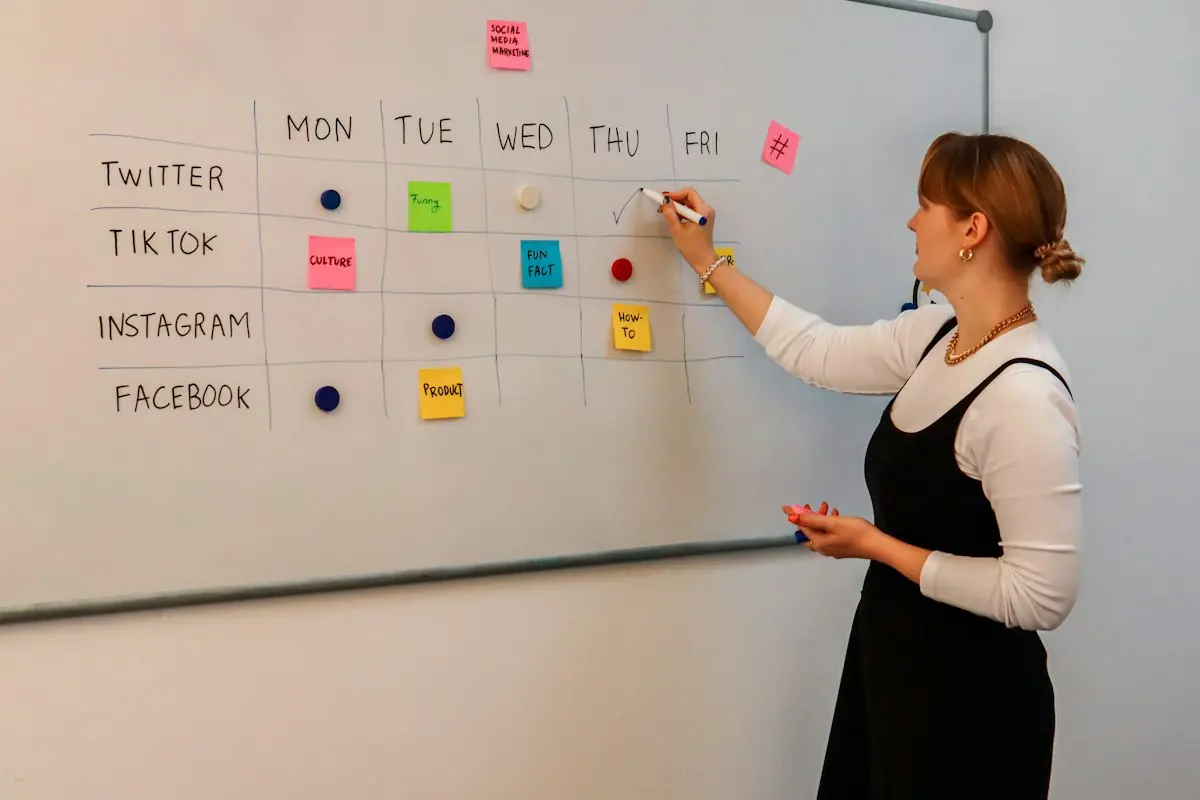
Use the month as a working plan
This calendar gives every day a useful task, not a demand to publish thirty feed posts. Some days are for listening, filming or checking the customer journey. Choose one primary platform and adapt the formats to what your account supports.
Before starting, pick one service to prioritise and a clear enquiry route. Replace the examples with your own expertise. Set aside time to answer replies, and publish identifiable customers or their material only with appropriate permission.
Week 1: Explain the essentials
Start by making your business easy to understand. Keep each published item focused on one customer question rather than listing every service.
- Day 1: Publish a short introduction naming your service, audience and coverage; invite visitors to view your service page.
- Day 2: Ask your team for five recent customer questions; save the exact wording as future prompts.
- Day 3: Answer the most common question in a short video; invite a relevant follow-up.
- Day 4: Check your bio, contact button and website form on a phone; fix any broken step.
- Day 5: Show the tools or materials used for one task; explain why one choice matters.
- Day 6: Ask followers which of two genuine service questions they want answered next.
- Day 7: Review comments and enquiries; note repeated confusion and choose next week's priority.
Week 2: Show the service experience
Help prospective customers picture the process. Use approved photographs, demonstrations or diagrams if real customer footage would disclose private information.
- Day 8: Explain the first appointment in three stages; link to your booking information.
- Day 9: Capture a demonstration with a colleague; check the background for documents and identifying details.
- Day 10: Publish the demonstration, describing the problem and method rather than making an unsupported result claim.
- Day 11: Reply thoughtfully to a relevant community or industry discussion, observing its promotion rules.
- Day 12: Share a preparation checklist; invite customers to save it for their appointment.
- Day 13: Introduce a team member through one useful tip related to their actual role.
- Day 14: Compare the week's posts and conversations; record which questions came from suitable prospects.
Week 3: Reduce buying uncertainty
This week addresses practical objections without pressuring people. Explain variables clearly and avoid publishing somebody else's quote or personal circumstances.
- Day 15: Explain three factors affecting a quotation; invite enquiries through your normal assessment route.
- Day 16: Turn a recurring misconception into a simple text graphic with a clear correction.
- Day 17: Share an approved customer story covering the initial need, work completed and relevant limitations.
- Day 18: Ask permission for a future customer contribution; explain the channels and intended use.
- Day 19: Compare two genuine service options and describe who each option may suit.
- Day 20: Publish an answer to the question selected on day six; acknowledge the audience's input.
- Day 21: Check enquiry quality and team workload; simplify next week's formats if production is becoming difficult.
Week 4: Invite an informed next step
Bring the month's lessons together. Repeat important messages in a new, useful form rather than inventing an offer to fill a slot.
- Day 22: Share a booking explainer covering what information you need and what happens next.
- Day 23: Create a short follow-up to your clearest explainer, answering a genuine question from its replies.
- Day 24: Spotlight a complementary local business with agreement; explain its relevance without implying a formal endorsement.
- Day 25: Share current availability only if accurate; state service boundaries and the correct enquiry route.
- Day 26: Show a quality-checking step and explain what it can and cannot establish.
- Day 27: Review scheduled content for outdated details, accessibility issues and missing permissions.
- Day 28: Publish a compact FAQ based on this month's conversations; link to fuller service information.
Days 29–30: Turn activity into learning
Keep a simple record of topics, formats, production time and useful outcomes. Compare similar items rather than declaring a winner from one unusually busy day.
GrowX can help adapt this calendar to your services and create a repeatable content workflow around the questions your customers actually ask.
- Day 29: Match relevant enquiries to content where possible; record unknown sources honestly rather than guessing attribution.
- Day 30: Select next month's three themes, reuse approved assets thoughtfully and schedule your first practical batch.
Frequently asked questions
What if I miss a day?
Continue with the next useful task. The calendar is a planning aid, not a platform requirement.
Can I repeat this plan?
Yes. Change the priority service, examples and customer questions so the next month adds value rather than repeating identical posts.